Asking for money instead of gifts, tacky or honest?
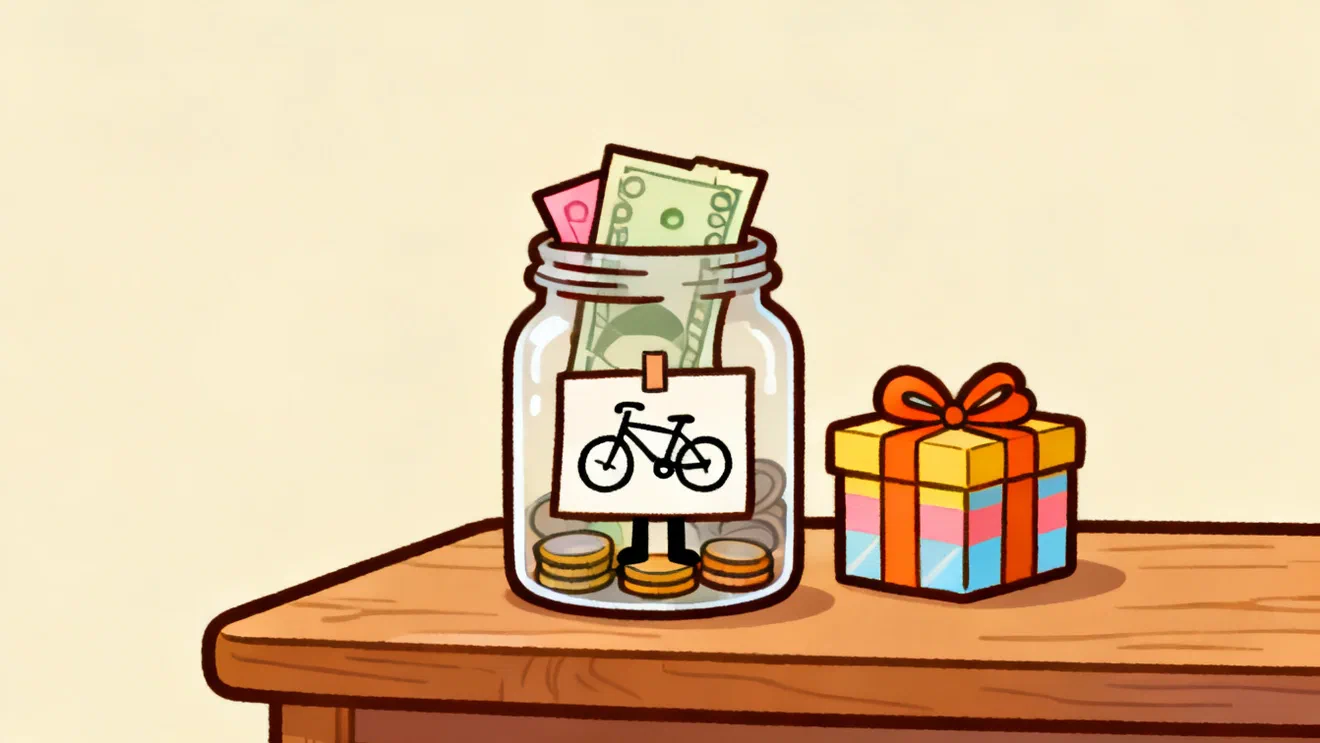
Asking for money instead of gifts is honest when it is for a named thing and somebody asked you first. It is tacky when it is a bare “cash please” with no thing behind it and nobody asked. That is why one half of your family thinks a money request is the most sensible idea they have heard all year and the other half has quietly decided you are grasping. They are reacting to two different asks. Name the thing, wait to be asked, and most of the tacky half comes round.
One line about weddings, because every other page on this subject is about them. This is not. I am writing about birthdays, kids’ savings and the big thing you are saving for, where the asking happens in a family chat and the money comes from six people, not a hundred.
Why asking for money instead of gifts feels rude to half the room
A gift is three things at once. The object, the money it cost, and the hour the giver spent choosing it. When you ask for cash you keep the money and throw away the other two. For some people that is a relief, because the hour of choosing was the part they dreaded. For others the hour was the gift, and you have just told them it was not wanted.
That is the whole disagreement. It is not about the money. It is about whether the choosing counted.
Money also has no hiding place. A sweater is a sweater and nobody knows what it cost. Twenty dollars in a card is twenty dollars, and the giver knows exactly where they fall in the family table of generosity. The ask made the number visible.
When money is the right ask
Three cases where I think it is honest, and I have done all three.
The thing is bigger than any one person would spend. A bike, a decent camera, the first real laptop. Six separate small gifts add up to the same money without becoming the one thing you wanted.
The thing cannot be bought. A course, a trip, a driving test, a deposit toward something. There is no link to paste and no box to wrap. Money is the only form the gift can take.
The child is too small to want anything. A one year old does not have a wish, and the ninth plush of the party is going to a charity shop by March. Money into an account the kid opens at eighteen is a better gift than most of what is in the gift bags.
The common thread is a named thing. “Money toward the bike” is a gift with a destination. “Money” on its own is a tip jar.
How to phrase it so it does not sound like a bill
Four parts, and I would not drop any of them.
Name the thing. Not “contributions welcome” but “I am saving for a road bike, the one in the photo”. The giver can picture it, and later they can see it and know they helped.
Give a range, and keep the bottom low. “Anything from ten upward” tells the aunt on a pension she is welcome and tells the brother with the big job there is no ceiling.
Make it optional, in words. “Only if you were going to get me something anyway, and a card is genuinely fine” is one sentence and it does most of the work.
Offer a non-money option in the same breath. This is the part most people skip, and it is the part that keeps the tacky half of the family on side. “Or if you would rather give something I can unwrap, there is a short list here.”
Put together it reads something like this. “Birthday is the 12th. I am saving for a road bike this year, so if you were planning something, a contribution toward it would be the best gift, anything at all. If you would rather get something I can unwrap, there are a few small things on my list. And a card on its own is completely fine.”
That is long for a text, and it should be. A short money ask sounds like an invoice. A long one sounds like a person.
Put it on the list, next to the normal gifts
The cleanest way I have found to do the optional part is to make the money a line on a list rather than the whole message. A few ordinary things at ordinary prices, and one item that says “contribution toward the road bike, any amount, I will say thank you with a photo of it”.
The money then sits beside a twenty dollar book and a pair of gloves, so it reads as one option among several. The person who hates giving cash picks the gloves without having to decline anything out loud. And the ask was invited, because you sent a list, not a demand, and I have written about where that line runs .
I keep mine in a wishstack, which is the app I am building. It is free on iOS, Android and web, and most of the list is links, you paste one and the card fills itself. But a wish does not need a shop link. “Contribution toward the road bike” with a note underneath is a perfectly good item, and that is where my money ask lives. One thing to be plain about so nobody is disappointed. Wishstack does not collect money. There is no pot and no balance, the actual transfer is a bank app or an envelope, whatever your family already uses, and the list only says what the money is for. Whoever takes the contribution line can mark it “I’ll get this” like any other item, and I do not see who claimed what, so two people do not both decide to “be the bike”.
For the relatives who will not give cash
Some people will never put money in a card. Usually it is the people who love choosing, and often it is the grandparents, who I wrote about in the overbuying piece . You will not change them, and a money ask will land as a small hurt however you phrase it.
So give them a part of the thing instead of a share of the money. If the big gift is a bike, they can be the helmet, the lock, the lights. If it is a camera, the bag or the first memory card. If it is a trip, the guidebook. They get to choose, wrap and hand over an object, and the object is still pointed at the thing you wanted. “Could you be the helmet” works on people “could you chip in” does not.
For a child’s savings account, the parallel is a book with a note inside, one real outfit, or an afternoon with the kid. The relatives who dislike cash are rarely people who dislike giving. They dislike giving a number.
Kids’ savings accounts, handled plainly
The first birthday is where most families run into this, and where the wording is usually worst, because parents are embarrassed and write around it. “In lieu of gifts, a contribution to Ella’s future” is what embarrassment sounds like.
Say it in normal words. “Ella has a savings account and she will get it at eighteen. If you want to put something in, here are the details, and if you would rather bring a book for her shelf, that is lovely too. She has more toys than floor.” The account, the alternative, the reason.
Two things make it go better. Keep the amounts private, so nobody can work out that one grandmother gave fifty and the other gave ten. And once a year, tell the people who contributed what the account came to, in one line, without the individual numbers. Money that disappears into an account without a word feels like it went into a hole, and that feeling is what stops people doing it next year.
Once the kid is old enough to want a thing, drop the account and ask for the thing. Everyone can picture a bike.
The version I would not send
“No gifts, but cash is welcome.” I have seen this on an invitation, and years ago I wrote something close to it. It fails twice. There is no named thing, so the money has nowhere to go, and nobody asked, so it reads as a fee for attending.
Ask for the bike, not the cash. People will give you the cash anyway, and they will feel better about it.