Buying things off your own wishlist before your birthday
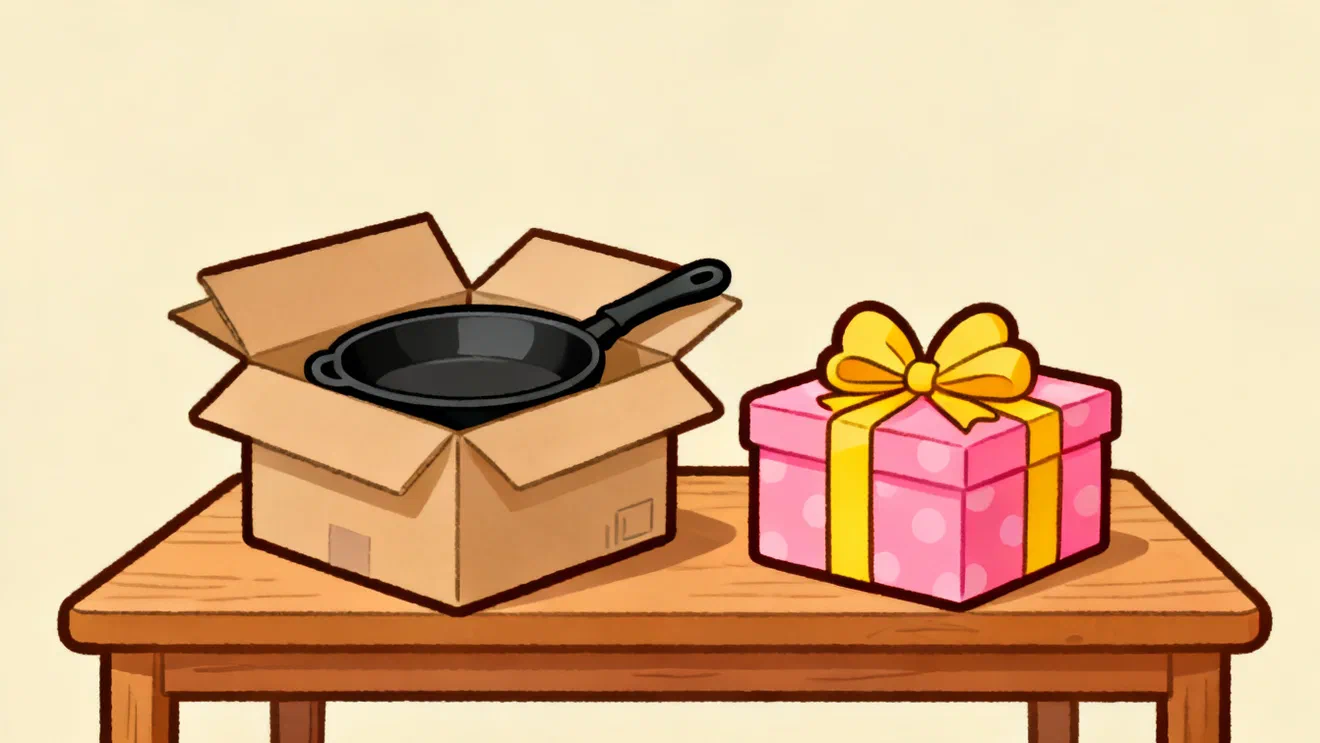
Buying off your own wishlist is fine, as long as you take the item off the list the same day. Not at the weekend, not at the next cleanup, that day. The thing you bought on Tuesday was, as far as the list is concerned, still available on Tuesday night, and someone who opened the list in August may have already decided it was theirs. You do not know that, because you are not supposed to know that. So the rule is not “never buy things you want”. The rule is that the list has to match what you own on every day it is visible to other people.
That is the whole answer. The rest is why it matters, what I do in the weeks before a birthday, and what to do once you have already slipped.
Why buying off your own wishlist spoils someone else’s plan
From the owner’s side a shared list looks like a one-way thing. You add, people read. But there is a second layer you cannot see. Someone opened the list in September, picked the headphones, marked them as taken so a cousin would not buy the same pair, and started waiting for the date. From where you sit nothing happened. The list looks exactly the way it did before.
In a wishstack this is by design. “I’ll get this” is hidden from the owner, which is what keeps the surprise of which item arrives, and for an adult that is most of the surprise there is. The cost of that design is that I, the owner, am the one person who does not know the headphones are spoken for. If I buy them on a Tuesday and leave them on the list, I have quietly spent my aunt’s money for her and thrown away three weeks of her planning. She finds out at the wrapping stage, or at the table, whichever is worse.
There was a thread on r/GiftIdeas in early September from a sister whose brother owns every gadget within days of mentioning it. I have written about that one from her side . What struck me reading it again is that nobody in that thread thought the brother was doing anything wrong. He wanted a thing, he could afford it, he bought it. The only failure was that his wants were still sitting in her phone as a list, unmarked, and she had no way of telling which ones had expired. Same failure, no app in the middle. The list did not match what he owned.
Deleting fixes all of it. Remove a wish and it is gone from the list for everyone, including the person who claimed it. They open the list, the headphones are not there, and they still have time to pick something else. That is the only signal you can send them, because you do not know who they are. So send it the same day.
The quiet window before a birthday
This is my rule and not a law, but for the four to six weeks before my birthday I do not buy anything off my own list at all. Not even on sale. Especially not on sale, because sales are exactly when I convince myself a thing is urgent.
The window is that long because people shop earlier than you would guess. Some order the week they are sent the link, in case it sells out. Some are waiting on delivery from abroad. Some bought it in a shop and it is already in a cupboard. The closer the date, the higher the chance that any given item has been acted on, and inside a month I treat every item as probably claimed. Outside six weeks most people have not started, and I buy freely, with the same-day delete.
If I want something inside the window, I have three options and all of them are better than the duplicate. Wait, which is usually fine, because most wants survive six weeks. Buy something that is not on the list, which is allowed and nobody minds. Or ask. “Is anyone getting me the headphones” is not an elegant question, but it is a one-line question, and the answer saves someone a return trip.
If you already bought it
Two steps, and the first one is urgent.
Delete it from the list now, before you finish reading this. Every hour it stays there is an hour in which someone can claim it, and an hour in which someone who already claimed it does not find out.
Then think about who asked you for ideas. Most years there is one person who said “what do you want this time” and got pointed at the list. Send them one line. “I caved and bought the headphones myself, sorry, the list is updated.” That person is the most likely to have claimed something, and they are the one person for whom a direct message about your own shopping is normal rather than odd. You do not need to post it in the family group chat. Nobody wants a status update on what you bought yourself. One person, one line, done.
If nobody asked you, the deletion is enough. Anyone who looks again sees a shorter list, and they will look again, because the people who follow my list get a push when I add something, and the usual move after taking one thing off is to add another, so the list does not get thin right when it is being read.
The consumable exception
Some things can be bought and stay on the list, and the same-day rule should not make anyone nervous about restocking. Coffee beans, the tea you like, the socks you wear through, hand cream, camera film, the good olive oil. Buying a bag of the coffee on Tuesday does not make a second bag on your birthday a duplicate. It makes it a bag you will open in November instead of October.
The test is simple. If two of the thing is better than one, it is a consumable and it stays. If two of the thing is a problem, it is not, and the rule applies. Books are the trap here. A book is cheap and it feels consumable, but a book you have already read is a second copy, and the same-day rule is for books too.
Say it in the note so the person claiming it knows the terms. “I go through one of these a month, more is always welcome.” Then you can restock all year without touching the list, and they can buy it without wondering whether you already did.
The time I did it anyway
I did this. Not the headphones, a cast iron pan. It had been on my list for about a year, and three weeks before my birthday it was on sale in a shop I happened to walk past. I bought it, cooked in it that evening, and did not think about the list once. The list was a thing I looked at when adding, not when buying.
On my birthday I unwrapped the same pan. The person who gave it had claimed it in August. The hidden claim had worked exactly as designed, my family had coordinated around it perfectly, and the one part of the system that failed was me. I returned the second pan. The explaining was worse than the returning. And that person has, I think reasonably, gone back to asking me what I want in person, which is the thing the list was meant to replace.
What I got wrong was not the buying. Buying the pan on sale was a good decision and I would make it again. What I got wrong was the fifteen seconds between the shop and my kitchen where I could have opened the list and deleted one line, and did not, because deleting felt like a chore for cleanup day. I wrote about what the scheduled cleanups are for , and they catch most things, but a bought item on a visible list is a duplicate already in motion, and a cleanup in January does not stop a purchase in October.
So the habit is small and boring. Bought it, deleted it, same day. Inside the quiet window, do not buy it at all. Consumables get a note and stay. And if you slip, delete first, then tell the one person who asked. The list is a promise to the people reading it that what is on it is still wanted, and it only takes one pan to teach you how much they were relying on that.