How to make a Christmas list for kids that relatives can use
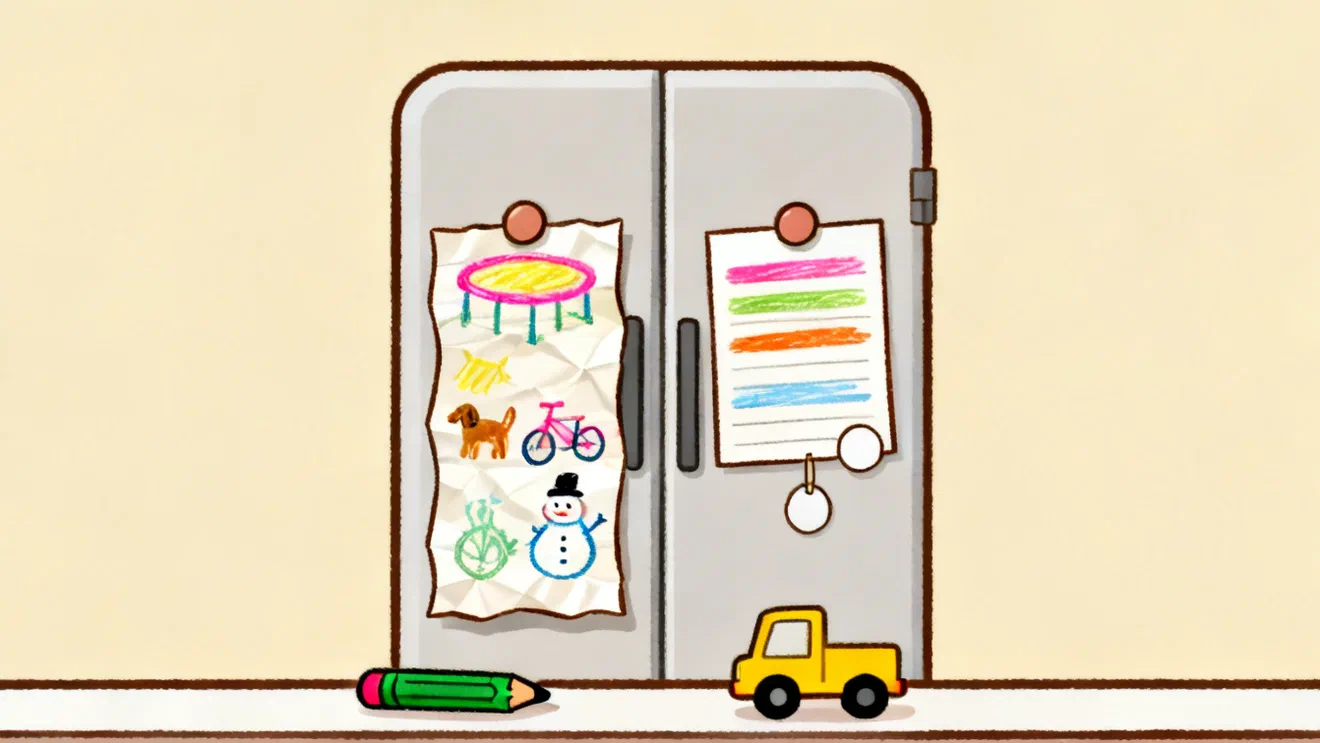
A Christmas list for kids is really two lists. The first is the raw one, everything your child says they want between now and December, in the order it comes out, from a $400 console to one specific blue pencil. You write all of it down and cut nothing. The second is the filtered one you hand to grandma, the aunt and the godparent. Eight to twelve real items, a price and a link on each, sorted so the relative with $25 knows where to look and nobody buys what you are already buying. The raw list is for the kid. The filtered list is for everyone else. Mixing them up is why relatives get a list they cannot use, and why a 9 year old opens the same thing three times.
Here is how I would build each half, by age. Teenagers are a different problem, their list is expensive rather than long, and I covered that version separately .
Why the kid’s list and the relatives’ list are different
A thread on Mumsnet this autumn asked the basic question, how do you even ask your kids what they want for Christmas. The replies split between parents who hand over a toy catalog and a pen, and parents who have stopped asking because the answer is either “everything” or “I don’t know”.
Both answers are real. A kid’s wishes arrive at random moments, usually in a shop, and are gone by dinner. They include things that are not gifts, a puppy, snow, a sleepover. And they have no sense of price, so a $3 slime sits next to a trampoline as equals.
None of that is a problem on the raw list. It becomes a problem the moment you forward it to a grandparent, who now has to work out which of the 23 lines is a real want, what each one costs, and whether “the Lego one” means a $15 set or a $300 one. Most relatives give up at that point and buy pajamas.
Getting real wishes out of a 4 to 6 year old
At this age, “what do you want for Christmas” gets you whatever is in front of them. Ask in the cereal aisle and the answer is cereal. So do not ask. Collect.
Photos in the shop. When they stop and point, take a picture of the thing and the shelf tag. That is one line of the raw list with a price already on it. By the end of October you have fifteen photos and a clear picture of what they are drawn to, as opposed to what they said once at the table. The toy they would not put down at a friend’s house counts the same way.
Ask narrow questions. “Do you want the dinosaur one or the digger one” gets an answer from a 4 year old. “What do you want” gets a shrug, or a horse.
And write it down the day it happens, with the date. A 4 year old’s wish has a half life of about a week. When you filter in November, a thing they wanted in September and again in November is real. A thing they wanted once in the Halloween aisle is not.
Letting a 7 to 11 year old write their own, with a line limit
Older kids can write the list themselves, and should. The problem flips. It is not that they want nothing or everything, it is that they cannot do it on demand. Someone on r/GiftIdeas this September had the adult version of this, a list requested, and everything they had wanted all year gone from their head the moment they sat down to write it. Kids are worse at this, not better.
So the list is not a sitting. It is a document that stays open from mid October, a sheet on the fridge or a list on your phone they can dictate into. Every time they say “I want” from now until December, the answer is “put it on the list”. That ends the nagging, and the list builds itself.
Give it a line limit. Ten lines. Not because ten is the number of gifts, but because a limit forces ranking. When line eleven shows up, something has to come off, and the kid is the one deciding. A 9 year old who has to choose between a thing from October and a thing from this week finds out what they actually want, and so do you.
A parent on r/Parenting this September was trying to come up with ten gifts for their daughter’s tenth birthday, one for each year. Ten things at once is hard even for a parent who knows the kid inside out, and that is roughly what a 23 line raw list does to a grandmother. Ten lines, ranked, with a price on each, is a different object. Anyone can shop from it. Kids this age can look the prices up themselves, and that is usually where “a drone” becomes “a $30 drone” or drops off, without a conversation about money.
The four gifts rule is a filter for you, not a limit for them
You have probably seen the rule. Something they want, something they need, something to wear, something to read. Plenty of families run Christmas on it, and plenty of kids have been told their list is “too long” because of it.
I would use it the other way round. Do not tell the kid about it. Use it as a sieve on the raw list when you build the relatives’ version. The 23 lines get sorted into want (most of them), need (the bike helmet), wear (the hoodie with the logo), read (the next book in the series). Anything in need, wear or read is perfect for a relative, because it is useful and it is not what the parents were going to buy anyway. The want pile is where you pick the top item for yourselves and leave the rest open.
Then cut three kinds of line. The things that are not gifts. The things they already have a version of. And the things that were said once and never again. What is left is usually 8-12 lines, all of them real.
What a Christmas list for kids needs before relatives see it
A price on every line. This is the single biggest difference between a list relatives use and one they ignore. Grandma has a number in her head. If she cannot see which lines fit that number, she buys the thing she can picture, which is a sweater.
A link, wherever there is one. “The Lego one” is not a line. A link to the exact set is. Sizes for anything wearable, the current size, not the one from last Christmas.
A cheap tier. Three or four things under $15 so the cousin who buys for nine children has somewhere to land. The stickers, the slime, the book.
A note on what you are buying. Mark the big one as taken, or the grandparent who has waited all year to be the one with the big box buys it too, and you have two.
And, if it is true, a line about what not to buy. No more plush. Nothing with batteries and a speaker. Relatives who overdo it usually want to be told, and I wrote about how to say it without a fight .
Then share it once. Not as five slightly different texts to five people, because the versions drift and two aunts buy the same thing. One list everyone looks at. I keep this kind of list in wishstack, the app I am building. Paste the link and the card fills itself with the photo and the price, the list goes out as one link, grandma opens it in a browser without installing anything, and whoever is buying can quietly mark a line as theirs so the next person skips it. The kid cannot see those marks, which matters when the kid is 9 and reads over your shoulder. When something new goes on in November, the people who subscribed get a push, so nobody is shopping from the October version.
The kid never sees the cut
Keep the raw list. All 23 lines. Do not show the kid the filtered version, and do not tell them which things came off, because to a 6 year old a line removed from a list is a thing that was taken away. The raw list is theirs. The filtered list is a shopping tool for adults. The kid gets the fun part, which is opening things that were actually on it.
And next year, start the raw list in September. A kid with a list that has been open for three months does not need to be asked what they want. They already told you, one shop at a time.