What to write next to each wishlist item
How to write a wishlist comes down to one sentence per item. Not the link, the sentence next to it. A bare link tells the buyer what page you looked at. It does not tell them the size, the color, whether “this one” means exactly this one or anything like it, or whether you still want it since you added it in June. Every one of those is a guess, and every guess is a way the gift goes wrong. The note is where you take the guessing away. Two lines, sometimes one. Here is what goes in it, and what should stay out.
The bare link problem
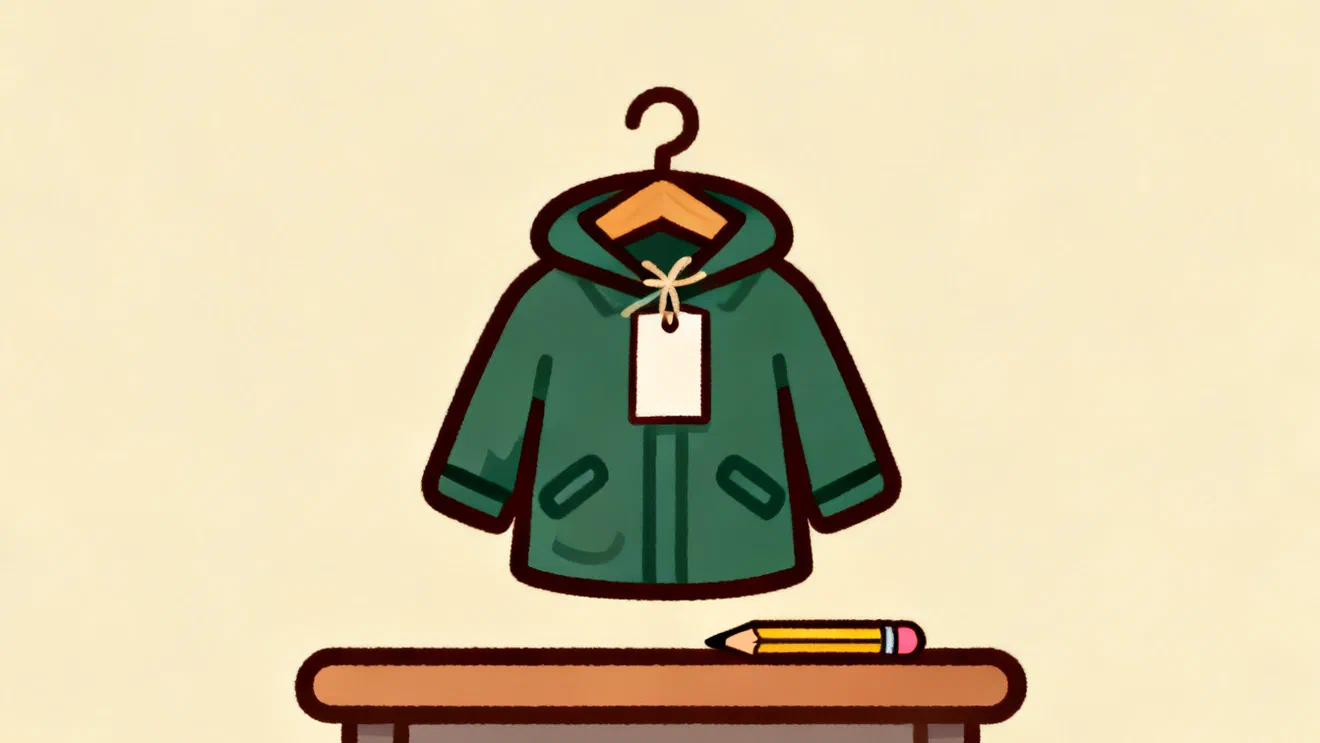
Picture the buyer. They open your list, see a photo of a jacket and a price, and click through. The page has four colors and six sizes. They do not know your size. They think you might have mentioned you like green once. They also notice a very similar jacket from another brand for $30 less and wonder if that would be fine or if you specifically wanted this one. And in the back of their mind, this item has been on the list since spring, so maybe you already bought it.
Four questions, zero answers, and the buyer either texts you (surprise gone) or picks (coin flip) or moves on to the next item (list shrinks). One sentence would have answered all four.
In a wishstack the card fills itself from the link, name, photo, price. So the note is the only thing you actually type, which is why I think it is worth typing well.
Four notes that save the gift
1. The size or variant
The most boring note and the most important one. “Medium, the green one.” “Size 9, wide fit.” “The 40cm one, not the 30.” If the product page has any choice on it, the note has to make it for the buyer. If you do not, the buyer either asks, which spoils it, or guesses, which is worse, because a wrong size is a gift that has to be returned by the person who received it. Nobody enjoys that errand.
Write the variant even when you think it is obvious. It is obvious to you.
2. Why you want it, in one line
“Mine died last winter.” “For the hiking trip in May.” “Been borrowing my sister’s for a year.” One line that turns a product into a wish. This is the note that makes a buyer feel like they picked something, rather than filled an order. It also does quiet work for the person who wants to go off-list. If they know the why, they can find something that fits the why. A different pair of boots for the same trip is a good gift. A random pair of boots is not.
Keep it to one line. A paragraph about why you want a kettle reads as a plea.
3. “Exactly this” or “this or anything like it”
The note that answers the $30 cheaper jacket question. Some items are the item. A specific book, a specific game, the replacement part for the thing you own. Say so. “Exactly this one, the others don’t fit.” Other items are an example of a category. A nice notebook, a mug, a plant. Say that too. “Any decent A5 dotted notebook, this is just one I liked.”
Without this note, cautious buyers will always pick the exact item, and adventurous buyers will always swap it, and you have no say in which one you get. With the note, you do. And “anything like it” is the single kindest thing you can write for a buyer on a budget, because it gives them room to spend less without feeling they cheaped out.
4. Price band, or “fine to split”
For the big item on the list, the one that costs more than any one person would spend, write that it can be a group gift. “Happy for this to be a shared one.” That sentence turns a $300 item from a demand into an option. Three people who each had a $50 gift in mind can now pool and get you the thing, and none of them feels pushed.
For everything else, a price band note is rarely needed, because the card shows the price. The exception is when the linked page is not the cheapest place to buy it. “Usually around $40, it goes on sale a lot” saves the buyer from paying full price on the one day it is not discounted.
Two notes that turn a list into an order
The line between a wishlist and a shopping order is thin, and it is mostly drawn by the notes. I wrote about the etiquette of the whole list in the piece on whether a wishlist is rude , and the same rule applies to each item. A note that helps the buyer is a kindness. A note that instructs the buyer is a demand.
Deadlines. “Need this before the 12th.” “Order early, shipping takes a while.” I understand the impulse, and for a Secret Santa with a fixed exchange date it can be fair. On a birthday or a family list it reads as a delivery schedule. If something genuinely has to arrive by a date, that is a thing you buy yourself.
“Don’t get the cheap one.” Or its cousins. “Not the knockoff.” “Only from this store.” “The one on Amazon is fake.” Even when true, this is the note that makes a buyer feel graded. If the cheap version really is unusable, fold it into note three. “Exactly this one, the cheaper copies fall apart” gives the same information without the tone. The buyer hears a reason instead of a rule.
There is a third one that is not a note but does the same damage. Writing the notes in the imperative. “Get medium.” “Buy the green.” Same words as “Medium, green” and a completely different feeling. Write them as facts about you, not instructions to them.
The title and the line at the top
The list itself gets a name and one line, and both matter more than they look.
The name should say whose list and, if it is tied to an occasion, which one. “Sam’s list” is fine for a lasting one. “Sam, 40th birthday” if it is for the day. Avoid anything cute. A list called “Things I deserve” is a joke to you and a tone to everyone else.
The line at the top is for the things that apply to every item. Sizes you wear, if the list has clothes on it. A note that nothing on it is urgent. And the one sentence that lowers the temperature of the whole thing. “No pressure on any of this, it’s just so nobody has to guess.” I put some version of that on every list I share, because the people opening it are wondering whether they are expected to buy something, and the answer should be there before they scroll.
What a good note looks like in practice
A rain jacket. Note: “Medium, the dark green. Mine leaks at the seams now. Any decent waterproof shell would do, this is just the one I tried on.”
Four things answered in three sentences. Size and color. Why. Exactly this or anything like it. The price is on the card.
A board game. Note: “Exactly this edition, the older one is missing the expansion. We play most Fridays.”
A camera. Note: “The big one on the list, happy for this to be shared between a few people. Been shooting on my phone for years and want to learn properly.”
None of these is longer than the product name on the box. None of them tell the buyer what to do. All of them mean the buyer opens the page, sees the choice, and already knows the answer.
When you have nothing to say about an item
Sometimes there is no note. A book you want to read, a specific coffee, a thing where the link says everything. Leave it blank. An empty note next to a clear item is better than “I want this because I like it”, which says nothing and takes up a line.
The note is not there to be filled. It is there for the buyer’s questions, and if the buyer has none, you are done. Most items need one line. A few need two. Nothing on a wishlist needs three.